
 IN
INundefined
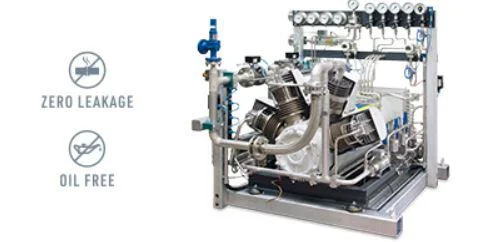
Hydrogen Compressors
4 products available
𝗪𝗵𝗮𝘁 𝗮𝗿𝗲 𝗛𝘆𝗱𝗿𝗼𝗴𝗲𝗻 𝗖𝗼𝗺𝗽𝗿𝗲𝘀𝘀𝗼𝗿𝘀?
Hydrogen compressors are specialized devices designed to increase the pressure of hydrogen gas for various applications. They play a critical role in the storage, transportation, and use of hydrogen in different industries. By compressing hydrogen, these machines facilitate its movement and allow it to be stored more efficiently, thereby enhancing its usability in various processes.
The primary uses of hydrogen compressors can be found in sectors such as energy, chemical manufacturing, and automotive. In the energy sector, they are essential for hydrogen fueling stations that support fuel cell vehicles. In the chemical industry, these compressors help in the production of ammonia and other hydrogen-based products. As the world shifts towards cleaner energy sources, the demand for hydrogen and its handling equipment continues to grow, making hydrogen compressors increasingly relevant in today's market.
𝗞𝗲𝘆 𝗙𝗲𝗮𝘁𝘂𝗿𝗲𝘀 𝗮𝗻𝗱 𝗦𝗽𝗲𝗰𝗶𝗳𝗶𝗰𝗮𝘁𝗶𝗼𝗻𝘀
Hydrogen compressors come with a range of features and specifications that cater to different industrial needs. Their design and performance characteristics are crucial for ensuring safe and efficient operation.
Key specifications include:
1. Maximum Pressure
- Typically ranges from 300 bar to 1,200 bar
- Determines the compressor's capability in high-pressure applications
2. Flow Rate
- Varies from 1 Nm³/h to over 100 Nm³/h
- Indicates the volume of hydrogen the compressor can handle per hour
3. Efficiency Rating
- Measured in terms of energy consumption per unit of hydrogen compressed
- Higher efficiency ratings reduce operational costs
4. Cooling Method
- Options include air-cooled and water-cooled systems
- Affects the compressor's performance in different environmental conditions
5. Noise Level
- Typically ranges from 60 dB to 85 dB
- Important for compliance with workplace noise regulations
6. Safety Features
- Includes pressure relief valves and automatic shut-off mechanisms
- Essential for preventing accidents and ensuring safe operation
7. Control System
- Can be manual, semi-automatic, or fully automatic
- Impacts the ease of use and operational efficiency
8. Material Construction
- Common materials include stainless steel and aluminum
- Affects durability and resistance to corrosion
These specifications are vital for ensuring the right fit for specific applications and enhancing overall operational performance.
𝗖𝗼𝗺𝗺𝗼𝗻 𝗔𝗽𝗽𝗹𝗶𝗰𝗮𝘁𝗶𝗼𝗻𝘀 𝗮𝗻𝗱 𝗨𝘀𝗲 𝗖𝗮𝘀𝗲𝘀
Hydrogen compressors are utilized across a variety of industries, reflecting their versatility and importance in modern applications.
1. Energy: Hydrogen compressors are integral to hydrogen fueling stations, providing compressed hydrogen gas for fuel cell vehicles.
2. Chemical Manufacturing: In ammonia production, hydrogen compressors facilitate the conversion of natural gas and water into ammonia, a key ingredient in fertilizers.
3. Oil and Gas: They are employed in the extraction and refining processes, where hydrogen is used for hydrocracking and desulfurization.
4. Metal Processing: Hydrogen compressors support applications in metal treatment processes, where hydrogen serves as a reducing agent.
5. Electronics: In semiconductor manufacturing, hydrogen is used in various processes, necessitating reliable compression solutions.
6. Food Industry: Hydrogen compressors are also used in food packaging processes to create modified atmosphere packaging, extending shelf life.
7. Aerospace: In aerospace applications, hydrogen is utilized as a propellant, requiring effective compression technology.
𝗣𝗿𝗼𝗱𝘂𝗰𝘁 𝗩𝗮𝗿𝗶𝗮𝗻𝘁𝘀 𝗮𝗻𝗱 𝗦𝘂𝗯𝗰𝗮𝘁𝗲𝗴𝗼𝗿𝗶𝗲𝘀
Hydrogen compressors come in various configurations and designs to meet diverse industrial needs.
Reciprocating Hydrogen Compressors
These compressors are known for their high efficiency and ability to achieve high pressures. They are commonly used in applications requiring significant pressure boosts, such as fueling stations and chemical production.
Rotary Hydrogen Compressors
These compressors offer continuous operation and are ideal for processes that require steady hydrogen flow. Their compact design makes them suitable for limited space environments.
Diaphragm Hydrogen Compressors
These compressors are designed for applications that demand high purity hydrogen. They prevent contamination, making them ideal for industries like pharmaceuticals and electronics.
𝗕𝗲𝗻𝗲𝗳𝗶𝘁𝘀 𝗮𝗻𝗱 𝗔𝗱𝘃𝗮𝗻𝘁𝗮𝗴𝗲𝘀
Hydrogen compressors provide several advantages that enhance operational efficiency and safety.
1. High Efficiency: These compressors are designed to optimize energy use, reducing operational costs for businesses.
2. Versatility: They can be used in a variety of applications across multiple industries, making them a valuable asset.
3. Enhanced Safety: With built-in safety features, hydrogen compressors minimize risks associated with high-pressure gas handling.
4. Compact Design: Many models are designed to occupy less space, allowing for easier installation in constrained environments.
5. Customization Options: Various configurations and features can be tailored to meet specific customer requirements, ensuring optimal performance.
6. Reliability: High-quality construction and robust designs ensure dependable operation, even in demanding conditions.
𝗕𝘂𝘆𝗶𝗻𝗴 𝗚𝘂𝗶𝗱𝗲 𝗳𝗼𝗿 𝗕𝟮𝗕 𝗕𝘂𝘆𝗲𝗿𝘀
When sourcing hydrogen compressors, it is important for B2B buyers to consider several key factors to ensure they make informed purchasing decisions.
1. Quality Assessment: Look for compressors that meet industry standards. Check for certifications and customer reviews to gauge product quality.
2. Supplier Verification: Vet suppliers thoroughly to ensure they provide reliable products and services. Research their reputation and history in the industry.
3. Pricing and MOQ: Understand the pricing structure and minimum order quantities. Compare costs among different suppliers to secure competitive pricing.
4. Delivery and Lead Times: Inquire about delivery schedules and lead times to ensure that you can meet your operational timelines.
5. Compliance Requirements: Ensure that the compressors meet local and international regulatory standards, which can vary by region and application.
𝗖𝗼𝗺𝗽𝗹𝗶𝗮𝗻𝗰𝗲 𝗮𝗻𝗱 𝗖𝗲𝗿𝘁𝗶𝗳𝗶𝗰𝗮𝘁𝗶𝗼𝗻𝘀
Compliance with industry standards is crucial for hydrogen compressors. Key quality standards include ISO 9001, which ensures a commitment to quality management practices, and CE certification, indicating conformity with European safety requirements.
Safety and testing requirements are also paramount in ensuring that hydrogen compressors operate safely under high-pressure conditions. Manufacturers must conduct rigorous testing to verify performance and safety features.
Regional compliance considerations are important, as regulations may differ significantly across regions. Buyers should be aware of these variations when selecting hydrogen compressors for their applications.
𝗪𝗵𝘆 𝗦𝗼𝘂𝗿𝗰𝗲 𝗛𝘆𝗱𝗿𝗼𝗴𝗲𝗻 𝗖𝗼𝗺𝗽𝗿𝗲𝘀𝘀𝗼𝗿𝘀 𝗳𝗿𝗼𝗺 𝗣𝗲𝗽𝗮𝗴𝗼𝗿𝗮?
Pepagora provides a trusted platform for sourcing hydrogen compressors, offering several key advantages for B2B buyers.
Verified Supplier Network: Pepagora connects buyers with a network of verified suppliers, ensuring access to quality products and reliable service.
Streamlined RFQ Process: The platform simplifies the request for quotation process, allowing buyers to obtain competitive pricing and detailed product information efficiently.
Trade Assurance and Support: Buyers benefit from trade assurance programs that protect their investments and ensure a secure transaction process.
Regional Coverage: With a broad geographic reach across India, the GCC, and Southeast Asia, Pepagora facilitates connections between buyers and suppliers in key markets, promoting growth and opportunities for businesses.
Newly Added


Recently Added
Kisan Enterprise
Industrial Air Filters For Compressed Air With 95% Efficiency
Industrial Air Filters For Compressed Air Systems Remove Moisture Oil
Industrial Compressor Aftercoolers Air Cooled Water Cooled Premium
Alphamech
Premium Jacketed Reactors With Agitator For Chemical Pharmaceutical Food Processing
Industrial Anchor Agitators For High Viscosity Mixing And Durable Performance
Rubber Adhesive Plants For High Efficiency Synthetic Production
Onus Engineering
Industrial Gas Systems Premium Moisture Traps Silica Gel Technology
Premium Gas Tubing Copper Stainless Steel Nylon Teflon Industrial Laboratory
Industrial Downstream Pressure Control Valve For Precise Regulation
Quantum Heat Treaters India Pvt. Ltd.
Industrial Grade Laboratory Magnetic Shielding OEM Solutions
OEM Magnetic Shielding Services Industrial Grade EMI Protection
OEM Industrial Grade Magnetic Shielding For Dashboard Instruments
ELGI Sauer Compressors Ltd
Industrial High Pressure Air Compressor 115 400 Bar Air Cooled Multi Stage
Elgi Sauer Torna 150 420 Bar Air Cooled Industrial Air Compressor
Industrial Sauer 5000 Series Water Cooled High Pressure Air Compressor
Why Businesses Trust Pepagora
Thousands of companies trust Pepagora to source smarter and sell faster
Expand Your Sales Globally
25000+Products listed.Get discovered by global buyers
Tools to boost visibility
Build your own catalog

Source Smarter,Grow Faster
4000+Active RFQs
100+ Countries served
Easy Sourcing Tools
