
 IN
INundefined
Crash Carts & Emergency Trolleys
4 products available
𝗪𝗵𝗮𝘁 𝗮𝗿𝗲 𝗖𝗿𝗮𝘀𝗵 𝗖𝗮𝗿𝘁𝘀 & 𝗘𝗺𝗲𝗿𝗴𝗲𝗻𝗰𝘆 𝗧𝗿𝗼𝗹𝗹𝗲𝘆𝘀?
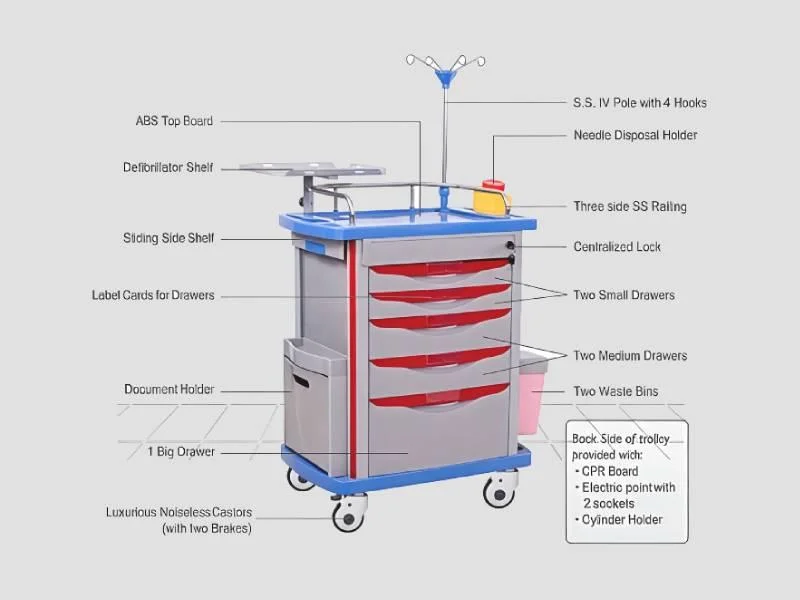
Crash carts and emergency trolleys are specialized mobile units designed to provide immediate access to medical supplies and equipment during emergencies. These units are essential in healthcare settings, particularly in hospitals, clinics, and emergency response teams. They are equipped with various medical tools and medications that are crucial for providing rapid patient care in critical situations.
The primary use of crash carts is to facilitate quick responses to life-threatening scenarios such as cardiac arrests, trauma cases, or other urgent medical emergencies. They typically contain essential items like defibrillators, airway management devices, intravenous supplies, and emergency medications. In business applications, they are vital in ensuring that healthcare professionals have the necessary resources readily available to save lives and stabilize patients effectively.
In the context of the healthcare industry, crash carts and emergency trolleys are indispensable. Their relevance is amplified by the increasing emphasis on rapid response protocols in hospitals and clinics. As emergency preparedness becomes a priority, the demand for these products continues to grow, leading to advancements in design and functionality that enhance their effectiveness and user-friendliness.
𝗞𝗲𝘆 𝗙𝗲𝗮𝘁𝘂𝗿𝗲𝘀 𝗮𝗻𝗱 𝗦𝗽𝗲𝗰𝗶𝗳𝗶𝗰𝗮𝘁𝗶𝗼𝗻𝘀
Crash carts and emergency trolleys come with a variety of features tailored to meet the needs of healthcare professionals. Understanding their specifications is crucial for selecting the right unit for specific applications.
Key specifications include:
1. Storage Capacity
- Varies based on design, typically accommodating multiple drawers and compartments
- Allows organization of essential medical supplies
2. Mobility
- Features sturdy wheels for easy maneuverability
- Some models may include locking mechanisms for stability
3. Material Construction
- Usually made from durable materials such as stainless steel or high-grade plastic
- Ensures longevity and ease of cleaning
4. Weight Capacity
- Designed to support a specific weight limit for medical supplies
- Typically ranges from 150 to 300 pounds depending on the model
5. Customization Options
- Availability of customized layouts to suit user preferences
- Configurations can include specific compartments for different medical items
6. Ergonomic Design
- Designed for easy access to supplies
- Features such as adjustable heights may be available
7. Safety Features
- May include locks to secure medications and equipment
- Some models have anti-tip designs to enhance safety during use
In summary, understanding the key features and specifications of crash carts and emergency trolleys is essential for selecting the most suitable option for healthcare settings.
𝗖𝗼𝗺𝗺𝗼𝗻 𝗔𝗽𝗽𝗹𝗶𝗰𝗮𝘁𝗶𝗼𝗻𝘀 𝗮𝗻𝗱 𝗨𝘀𝗲 𝗖𝗮𝘀𝗲𝘀
Crash carts and emergency trolleys serve various industries beyond just hospitals. They are versatile tools that can be adapted for multiple applications.
1. Healthcare Facilities: In hospitals and clinics, crash carts are essential for emergency response teams, providing immediate access to life-saving equipment.
2. Ambulance Services: Emergency medical technicians utilize portable emergency trolleys equipped with necessary supplies to manage critical situations during patient transport.
3. Long-term Care Facilities: Nursing homes and assisted living centers use these carts to ensure that staff can quickly address medical emergencies among residents.
4. Educational Institutions: Some schools and universities equip their health offices with crash carts in case of on-campus emergencies.
5. Industrial Settings: Manufacturing plants and construction sites may maintain emergency trolleys to address injuries or health crises that arise on-site.
6. Military and Emergency Response: Crash carts are crucial in military medical units and emergency response teams, enabling swift medical responses in the field.
𝗣𝗿𝗼𝗱𝘂𝗰𝘁 𝗩𝗮𝗿𝗶𝗮𝗻𝘁𝘀 𝗮𝗻𝗱 𝗦𝘂𝗯𝗰𝗮𝘁𝗲𝗴𝗼𝗿𝗶𝗲𝘀
Crash carts and emergency trolleys come in various configurations and designs to meet diverse needs. While specific subcategories may not be available, understanding the variations can help in selecting the right product.
Standard Crash Cart
This variant is designed for general hospital use. It typically includes multiple drawers for storing medications and medical supplies, along with a flat surface for additional equipment.
Mobile Emergency Trolley
This variant is lightweight and designed for easy transport. It often features compact storage solutions to accommodate essential items while remaining maneuverable.
Pediatric Crash Cart
Specifically designed for pediatric emergencies, this variant includes compartments tailored for children's medical supplies, ensuring that healthcare providers can respond effectively to young patients.
𝗕𝗲𝗻𝗲𝗳𝗶𝘁𝘀 𝗮𝗻𝗱 𝗔𝗱𝘃𝗮𝗻𝘁𝗮𝗴𝗲𝘀
Investing in crash carts and emergency trolleys offers numerous advantages for healthcare providers and organizations.
Key benefits include:
1. Rapid Access to Supplies: These carts allow quick retrieval of essential medical equipment during emergencies, improving response times.
2. Improved Patient Outcomes: By ensuring immediate availability of life-saving tools, crash carts contribute to better patient care and outcomes.
3. Enhanced Organization: The structured storage in these trolleys helps keep medical supplies organized, reducing the time spent searching for items.
4. Increased Safety: With secure storage for medications, crash carts help prevent unauthorized access and potential misuse.
5. Customization: Many models offer customizable configurations, allowing healthcare facilities to tailor carts to their specific needs.
6. Durability: Constructed from high-quality materials, crash carts are built to withstand the rigors of medical environments, ensuring long-term reliability.
𝗕𝘂𝘆𝗶𝗻𝗴 𝗚𝘂𝗶𝗱𝗲 𝗳𝗼𝗿 𝗕𝟮𝗕 𝗕𝘂𝘆𝗲𝗿𝘀
When sourcing crash carts and emergency trolleys for your organization, several factors should be considered to ensure the right selection.
1. Quality Assessment: Evaluate the materials and construction quality to ensure that the cart will withstand daily use in a healthcare setting. Look for units that meet industry standards for durability.
2. Supplier Verification: Vet suppliers thoroughly to ensure they provide high-quality products. Check for reviews, certifications, and their history in the industry.
3. Pricing and MOQ: Understand the pricing structures and minimum order quantities (MOQ) to align with your budget and procurement needs.
4. Delivery and Lead Times: Consider logistics and delivery times, especially if you need carts urgently. Ensure suppliers can meet your timelines.
5. Compliance Requirements: Verify that the products meet relevant safety and quality regulations. Compliance with certifications like CE is essential for ensuring safety and reliability.
𝗖𝗼𝗺𝗽𝗹𝗶𝗮𝗻𝗰𝗲 𝗮𝗻𝗱 𝗖𝗲𝗿𝘁𝗶𝗳𝗶𝗰𝗮𝘁𝗶𝗼𝗻𝘀
Compliance and certifications are critical in the manufacturing and use of crash carts and emergency trolleys. These products must adhere to various quality standards and regulations to ensure safety and effectiveness.
Relevant quality standards include ISO 9001, which focuses on quality management systems, ensuring that manufacturers maintain high-quality processes. Additionally, HACCP (Hazard Analysis Critical Control Point) may apply in environments where food safety is a concern.
Industry certifications, such as CE marking, are essential as they indicate compliance with European safety standards. This certification ensures that the products meet specific health, safety, and environmental protection requirements.
Safety and testing requirements are crucial for verifying the performance and durability of crash carts. Manufacturers must conduct rigorous testing to ensure their products can withstand the demands of emergency use.
Regional compliance considerations may vary based on local regulations, making it important for buyers to be aware of specific requirements in their area.
𝗪𝗵𝘆 𝗦𝗼𝘂𝗿𝗰𝗲 𝗖𝗿𝗮𝘀𝗵 𝗖𝗮𝗿𝘁𝘀 & 𝗘𝗺𝗲𝗿𝗴𝗲𝗻𝗰𝘆 𝗧𝗿𝗼𝗹𝗹𝗲𝘆𝘀 𝗳𝗿𝗼𝗺 𝗣𝗲𝗽𝗮𝗴𝗼𝗿𝗮?
Pepagora offers a reliable platform for sourcing crash carts and emergency trolleys, providing several key advantages for B2B buyers.
Verified Supplier Network: Pepagora connects buyers with a network of verified suppliers, ensuring that you can source high-quality products with confidence. This network is continuously monitored to maintain service standards.
Streamlined RFQ Process: The request for quotation (RFQ) process on Pepagora is designed to be user-friendly. Buyers can easily compare quotes and select the best offers tailored to their needs.
Trade Assurance and Support: Pepagora provides trade assurance, offering buyer protection throughout the procurement process. This ensures that you receive what you ordered and that your transactions are secure.
Regional Coverage: With a strong presence in India, the GCC, and Southeast Asia, Pepagora offers extensive regional coverage, making it easy for buyers to access suppliers in their geographic area. This broad reach enhances the chances of finding the right products suited to local market needs.
Newly Added


Recently Added
Blue Sky System
Industrial Inorganic Compounds For Manufacturing And Laboratory Use
Industrial Epoxy Coatings Durable Chemical Resistant Flooring Solutions
Waterproofing Solutions For Construction And Industrial Applications
Universe Surgical
Hospital Bed Unipro Home Easy Multifunctional Motorized with Commode
UNIPRO 2 Hospital Bed with Fall Detection and Weight Monitoring
Electric Hospital Bed with Adjustable Positioning and Safety Features
Medify Surgicals
MS Cosy Aluminum Electric Wheelchair Lightweight Foldable Mobility Aid with 15km Range
CP Child Wheelchair: Foldable Automatic Mobility Aid with Aluminum Frame & 75kg Capacity
CPWC 41 CP Wheelchair: Lightweight Aluminum Manual with Adjustable Armrests & 16 Inch Seat
Why Businesses Trust Pepagora
Thousands of companies trust Pepagora to source smarter and sell faster
Expand Your Sales Globally
25000+Products listed.Get discovered by global buyers
Tools to boost visibility
Build your own catalog

Source Smarter,Grow Faster
4000+Active RFQs
100+ Countries served
Easy Sourcing Tools
