IN
INundefined

Similar Products
Description
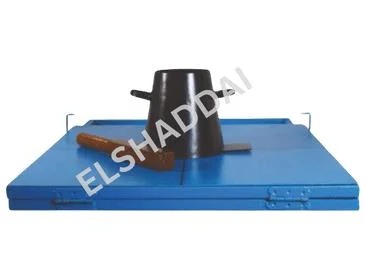
The tamping bar is a precision-engineered laboratory instrument designed specifically for compacting concrete specimens within cylindrical molds. This essential tool ensures thorou...
The tamping bar is a precision-engineered laboratory instrument designed specifically for compacting concrete specimens within cylindrical molds. This essential tool ensures thorough consolidation of concrete mixtures by eliminating air pockets and achieving uniform density throughout the sample. Manufactured from high-quality materials, the tamping bar features a hemispherical tip that applies consistent pressure without damaging mold surfaces. Its balanced design allows for comfortable handling during repetitive compaction procedures, making it indispensable for accurate concrete testing and quality verification processes. The tool's construction meets international standards for concrete testing equipment, ensuring reliable performance across various laboratory conditions and concrete mix formulations.

Civil engineering laboratories, construction material testing facilities, and research institutions extensively utilize tamping bars for preparing standardized concrete test specimens. These tools are crucial in quality control processes for infrastructure projects, building construction, and concrete product manufacturing. Construction companies rely on properly compacted samples to verify concrete strength specifications before proceeding with large-scale pours. Material testing laboratories use tamping bars to ensure compliance with ASTM, IS, and other international standards for concrete testing. Educational institutions incorporate these tools into civil engineering curricula to teach proper concrete testing methodologies and quality assurance practices.

The tamping bar delivers significant business value through enhanced testing accuracy and operational reliability. By ensuring proper specimen compaction, it prevents costly testing errors that could lead to structural failures or project delays. The tool's durable construction minimizes replacement costs and maintains consistent performance over extended periods. Customization options allow businesses to tailor the equipment to specific testing requirements and volume needs. This reliability translates into trustworthy test results that support informed decision-making in construction projects and material certification processes, ultimately protecting investments and ensuring regulatory compliance.

Key Features:
- Hemispherical tip design for uniform pressure distribution
- High-quality mild steel or stainless steel construction
- Balanced weight for comfortable handling during compaction
- Precision manufacturing for consistent performance
- Standard-compliant dimensions for accurate testing

Benefits:
- Ensures accurate compressive strength test results
- Eliminates air voids and ensures uniform density
- Reduces testing errors and associated costs
- Enhances laboratory efficiency and productivity
- Supports compliance with international testing standards
Specifications
| Additional Information | |
|---|---|
| Country of Origin | 106 |
| Customisable | No |
Application
The tamping bar is essential for preparing concrete test specimens in laboratory environments. It delivers consistent compaction in cylindrical molds, ensuring uniform material distribution and eliminating voids that could compromise test accuracy. This tool is fundamental for achieving reliable results in concrete quality assessment and structural integrity verification.

Construction material testing labs and civil engineering facilities rely on tamping bars for standardized specimen preparation. These tools help maintain compliance with international testing standards while ensuring repeatable results across different batches and mixtures. Proper compaction directly correlates with accurate strength measurements in quality control processes. Real-world applications:
Real-world applications:
- Concrete compressive strength testing in construction quality control laboratories
- Sample preparation for civil engineering research and academic institutions
- Quality assurance testing for ready-mix concrete production facilities
- Infrastructure project compliance verification for government agencies
- Material certification testing for construction material manufacturers
Trade Details
| Available Stock | In stock |
| Sample Availability | No |
Payment Terms
| Payment Terms |
|
Shipping & Logistics
| Shipping Internationally | No | |
| Methods | -- | |
| IncoTerms | -- | |
| Port of Dispatch | Chennai | |
| Packaging Type | -- | |
| Units per Package | -- | |
| Barcode / HSN / GTIN / UPC | -- | |
| Dispatch Lead time | -- |
Company Profile

Elshaddai Engineering Equipments, Tamil Nadu Tamil Nadu, India
Tamil Nadu, IndiaIndustrial Equipment & Machinery•ManufacturerImporter / Exporter
Factory Details
Factory SizeBelow 1000 sqm
Concrete Compaction Tamping Bar For Cylinder Molds And Lab Testing
Professional tamping bar for concrete compaction in cylinder molds. Ensures uniform density, eliminates air pockets, and guarantees accurate compressive strength testing for construction and lab use.
Min. Order Quantity: 10 Unit
Shipping
Shipping fee and delivery date to be negotiated. Contact supplier now for more details.
Elshaddai Engineering Equipments
 Tamil Nadu, India
Tamil Nadu, IndiaIndustrial Equipment & MachineryManufacturer