
 IN
INundefined
Similar Products
Description
Inert atmosphere sintering represents the pinnacle of powder metallurgy technology, delivering superior component quality through precise environmental control. This advanced manuf...
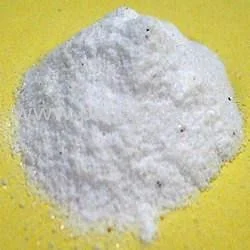
Inert atmosphere sintering represents the pinnacle of powder metallurgy technology, delivering superior component quality through precise environmental control. This advanced manufacturing process involves compacting metal powders and heating them within a carefully regulated inert gas environment, typically argon or nitrogen. The complete exclusion of oxygen during the critical heating phase prevents surface oxidation and ensures uniform material densification throughout the component. Operating within a temperature range of 800°C to 1800°C, the process achieves remarkable density improvements exceeding 95% of theoretical maximum while maintaining dimensional accuracy within ±0.1 mm. This level of precision manufacturing produces components with exceptional mechanical properties, including enhanced strength, improved wear resistance, and superior surface finish quality that meets the most demanding industrial specifications.

The versatility of inert atmosphere sintering makes it indispensable across multiple high-performance industries. Automotive manufacturers utilize this technology for producing critical engine components, transmission parts, and braking system elements that require consistent material properties and reliable performance under extreme conditions. Aerospace applications benefit from the process's ability to create lightweight yet strong structural components and turbine blades with oxidation-free surfaces. Medical device manufacturers rely on inert atmosphere sintering for creating biocompatible implants and surgical instruments that demand absolute material purity and corrosion resistance. Electronics industry applications include precision connectors, shielding components, and heat sinks where dimensional stability and electrical properties are paramount. Industrial machinery sectors employ sintered components for cutting tools, molds, and wear-resistant parts that maintain performance in demanding operational environments.

Businesses choosing inert atmosphere sintering gain significant competitive advantages through improved product reliability and manufacturing efficiency. The process delivers consistent, repeatable results batch after batch, reducing quality control issues and minimizing production delays. With atmosphere control efficiency exceeding 99% and temperature uniformity maintained within ±5°C, manufacturers can trust that every component meets exact specifications without variation. The technology's material compatibility with stainless steel, copper, titanium, and various alloys provides design flexibility while maintaining cost-effectiveness. Cycle times ranging from 2 to 10 hours ensure timely production without compromising quality, making it suitable for both prototyping and high-volume manufacturing. The resulting components demonstrate enhanced mechanical properties, longer service life, and reduced maintenance requirements, ultimately lowering total cost of ownership for end-users.

Key Features:
- High density improvement achieving over 95% theoretical density for superior strength
- Precise temperature uniformity maintained within ±5°C throughout the process
- Exceptional atmosphere control efficiency exceeding 99% for oxidation prevention
- Tight dimensional accuracy within ±0.1 mm ensuring consistent part geometry
- Broad material compatibility including stainless steel, copper, titanium and alloys

Benefits:
- Produces oxidation-free components with enhanced mechanical properties and longer lifespan
- Delivers superior surface finish quality reducing post-processing requirements
- Enables creation of complex geometries difficult to achieve with traditional methods
- Provides consistent, repeatable results with minimal batch-to-batch variation
- Reduces total manufacturing costs through improved yield and reduced scrap rates
Specifications
| productDetailPage.specification.attribute | productDetailPage.specification.value |
|---|---|
| Density ImprovementTemperature UniformityAtmosphere Control EfficiencyDimensional AccuracySurface Finish QualityAtmosphereTemperature RangeMaterial CompatibilityCycle TimeBenefits |
| Additional Information | |
|---|---|
| Country of Origin | India |
| Customisable | No |
Application
Inert atmosphere sintering transforms metal powders into high-performance components through controlled heating in oxygen-free environments. This advanced powder metallurgy technique ensures uniform densification while preventing surface oxidation, making it ideal for critical applications where material integrity cannot be compromised. The process maintains precise dimensional control and enhances mechanical properties across various metal types including stainless steel, copper, titanium, and specialized alloys.

Manufacturers across multiple industries rely on inert atmosphere sintering for producing durable, high-strength parts with exceptional consistency. The technology enables creation of complex geometries that would be difficult or impossible to achieve through traditional manufacturing methods. With temperature control within ±5°C and atmosphere efficiency exceeding 99%, this process delivers components that meet stringent quality standards for both prototyping and mass production requirements. Real-world applications:
Real-world applications:
- Automotive engine components including valves, gears, and transmission parts requiring high wear resistance
- Aerospace structural elements and turbine blades that demand oxidation-free surfaces and thermal stability
- Medical implants and surgical instruments needing biocompatible, corrosion-resistant properties
- Electronics connectors and shielding components requiring precise dimensions and electrical conductivity
- Industrial cutting tools, molds, and machinery parts that benefit from enhanced hardness and durability
Trade Details
| Available Stock | In stock |
| Sample Availability | No |
Payment Terms
| Payment Terms |
|
Company Profile

Quantum Heat Treaters India Pvt. Ltd. , Tamil Nadu Tamil Nadu, India
Tamil Nadu, IndiaIndustrial Equipment & Machinery
Factory Details
Factory Size1000-5000 sqm
Annual Production Capacity0
Main Markets
Eastern Asia
South Asia
Southeast Asia
Inert Atmosphere Sintering High Density Metal Components For Automotive Aerospace
Inert atmosphere sintering delivers high-density metal components with superior strength and precision. Our process prevents oxidation using argon/nitrogen gas, ensuring reliable performance for automotive, aerospace, and industrial applications.
Min. Order Quantity: 1
Shipping
Shipping fee and delivery date to be negotiated. Contact supplier now for more details.
Quantum Heat Treaters India Pvt. Ltd. 
 Tamil Nadu, India
Tamil Nadu, IndiaIndustrial Equipment & Machinery