IN
INundefined
Similar Products


Description
FRP rods, or Fiber Reinforced Plastic rods, are engineered as high-performance, non-metallic reinforcement components specifically for optical fiber cables (OFCs). Manufactured fro...
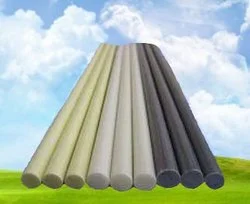
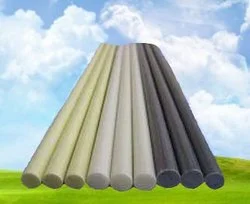
FRP rods, or Fiber Reinforced Plastic rods, are engineered as high-performance, non-metallic reinforcement components specifically for optical fiber cables (OFCs). Manufactured from premium-grade glass fibers embedded in advanced resin matrices, these rods deliver exceptional tensile strength and structural rigidity. Their primary function is to protect the delicate optical fibers within the cable from buckling, stretching, and mechanical damage during both the installation process and throughout decades of service. By offering a robust yet non-conductive alternative to traditional steel reinforcements, they address critical safety and performance challenges in modern cable design, ensuring long-term reliability across diverse and challenging installation environments.

These rods are extensively utilized within the telecommunications industry, reinforcing fiber optic cables for aerial installations on poles, underground duct deployments, and direct burial applications. The energy and power transmission sector relies on them for creating dielectric cable cores, essential for preventing electrical faults and interference in high-voltage environments. Civil engineering and infrastructure projects, including bridges, tunnels, highways, and railway networks, incorporate FRP rods due to their unmatched resistance to corrosion from moisture, chemicals, and de-icing salts. Furthermore, they are indispensable in marine and coastal projects, industrial plants, and any setting where metallic corrosion or electromagnetic compatibility is a primary concern for long-term asset integrity.

Investing in high-quality FRP rods delivers significant business value through enhanced project reliability and reduced total cost of ownership. Their durability translates directly into fewer cable failures, minimized network downtime, and lower lifetime maintenance and replacement expenses. The elimination of rust and galvanic corrosion issues extends cable lifespan far beyond that of metallic alternatives, protecting infrastructure investments. Their non-conductive nature enhances worksite safety and ensures signal purity in sensitive communication and power applications. Sourcing from a reliable supplier guarantees consistent material quality, precise dimensional tolerances, and product performance that meets stringent industry standards, providing peace of mind for engineers, project managers, and procurement specialists.

Key Features:
- Exceptional high tensile strength and rigidity for superior load-bearing capacity and cable protection.
- Inherently non-conductive and dielectric properties, eliminating electrical hazards and electromagnetic interference.
- Excellent corrosion resistance, performing reliably in harsh environments including marine, industrial, and chemical exposures.
- Lightweight construction compared to steel, facilitating easier handling, transportation, and installation.
- Dimensional stability and low thermal expansion, ensuring consistent performance across a wide temperature range.

Benefits:
- Ensures long-term cable integrity and signal reliability, reducing the risk of network failures and costly repairs.
- Enhances safety by removing electrical conductivity risks for installers and within operational systems.
- Delivers a longer service life and lower lifetime costs by eliminating corrosion-related degradation and maintenance.
- Simplifies logistics and installation processes due to the lightweight and manageable nature of the rods.
- Provides a future-proof solution compatible with the growing demand for reliable, high-bandwidth communication and power infrastructure.
Specifications
| Additional Information | |
|---|---|
| Country of Origin | India |
| Customisable | No |
Application
FRP rods serve as essential non-metallic strength members in optical fiber cables, providing critical structural integrity without electrical conductivity. Their high tensile strength and rigidity prevent cable buckling and damage during installation and throughout the operational lifespan, ensuring reliable performance in demanding aerial and underground deployments across various environmental conditions.

These rods are particularly valuable in applications where electromagnetic interference must be eliminated, as their dielectric properties prevent signal disruption. Their inherent corrosion resistance ensures longevity in humid, acidic, alkaline, or marine environments, significantly reducing long-term maintenance costs and enhancing overall system safety and reliability for infrastructure projects.
- Reinforcing optical fiber cables in telecommunications networks to ensure durability and maintain signal integrity over long distances.
- Supporting overhead power transmission lines where non-conductive materials are mandatory to prevent electrical hazards and outages.
- Strengthening underground cables in urban infrastructure and utility projects to resist environmental stress, soil corrosion, and physical damage.
- Providing structural support in marine, coastal, and offshore installations due to exceptional resistance to saltwater degradation and humidity.
- Enhancing reliability in railway signaling and transportation communication systems by ensuring cable performance in varied and extreme weather conditions.
Trade Details
| Available Stock | In stock |
| Sample Availability | No |
Payment Terms
| Payment Terms |
|
Company Profile

Bharat Fiber Glass Ind, Gujarat
 Gujarat, India
Gujarat, IndiaElectronics & Electrical•ManufacturerImporter / Exporter
Factory Details
Factory SizeBelow 1000 sqm
Annual Production Capacity0
FRP Rods For OFC Cables High Strength Non Metallic Reinforcement
High-strength FRP rods for OFC cables provide reliable non-metallic reinforcement for telecom, power transmission, and infrastructure projects requiring durability and corrosion resistance.
Min. Order Quantity: 1 units
Shipping
Shipping fee and delivery date to be negotiated. Contact supplier now for more details.
Bharat Fiber Glass Ind Gujarat, India
Gujarat, IndiaElectronics & ElectricalManufacturer