
 IN
INundefined
Similar Products





Description
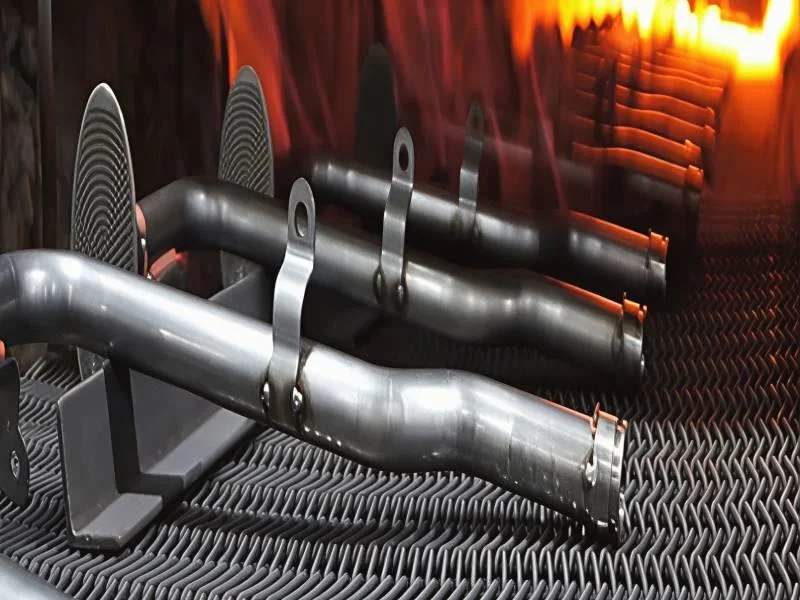
Continuous atmosphere brazing represents the pinnacle of precision metal joining technology, utilizing controlled heating within a protective gas environment to create superior bon...
Continuous atmosphere brazing represents the pinnacle of precision metal joining technology, utilizing controlled heating within a protective gas environment to create superior bonds between metal components. This advanced process prevents oxidation during heating, ensuring clean, flux-free joints with exceptional mechanical properties. The method achieves joint strengths up to 500 MPa while maintaining dimensional accuracy within ±0.1 mm, making it ideal for high-volume production runs where consistency and reliability are paramount. Unlike conventional brazing, the continuous atmosphere approach guarantees temperature uniformity of ±5°C throughout the heating chamber, eliminating hot spots and ensuring every joint receives identical thermal treatment for uniform quality across all production batches.

This technology finds extensive application across multiple industrial sectors where joint reliability directly impacts product performance and safety. Automotive manufacturers utilize continuous atmosphere brazing for critical components like transmission parts, fuel system elements, and heat exchangers that must withstand vibration and thermal cycling. Aerospace companies depend on the process for turbine components, structural assemblies, and environmental control systems requiring high strength-to-weight ratios and corrosion resistance. The HVAC industry employs it for coil manufacturing and heat exchanger production, while industrial equipment manufacturers use it for hydraulic components, precision gears, and machinery parts that operate under demanding conditions. Medical device manufacturers also rely on this method for surgical instruments and diagnostic equipment where joint purity and precision are non-negotiable.

The business value of continuous atmosphere brazing extends beyond technical specifications to deliver tangible operational advantages. Manufacturers benefit from reduced rejection rates thanks to the process's 99% atmosphere control efficiency and consistent output quality, directly lowering production costs and minimizing material waste. The method's automation compatibility enables high-volume production with minimal operator intervention, increasing throughput while maintaining quality standards. The corrosion-resistant joints meeting ASTM standards ensure longer product lifecycles and reduced warranty claims, enhancing brand reputation for reliability. Customization options allow adaptation to specific production requirements, while the process's repeatability ensures that every component meets exact specifications batch after batch, building trust with clients who depend on consistent quality for their own products.

Key Features:
- Joint strength capability reaching 500 MPa for durable connections
- Temperature uniformity maintained within ±5°C throughout the process
- Atmosphere control efficiency exceeding 99% preventing oxidation
- High corrosion resistance meeting ASTM quality standards
- Dimensional accuracy within ±0.1 mm for precision fit

Benefits:
- Consistent joint quality across high-volume production runs
- Reduced material waste and lower rejection rates
- Longer product lifecycle with corrosion-resistant joints
- Automation-friendly process increasing production efficiency
- Customizable solutions for specific industry requirements
Specifications
| productDetailPage.specification.attribute | productDetailPage.specification.value |
|---|---|
| Joint strengthTemperature uniformityAtmosphere control efficiencyCorrosion resistanceDimensional accuracy |
| Additional Information | |
|---|---|
| Country of Origin | India |
| Customisable | No |
Application
Continuous atmosphere brazing is essential for creating durable, leak-proof joints in complex metal assemblies across multiple sectors. Its controlled process ensures oxidation-free bonding, making it indispensable for components exposed to high temperatures, pressure variations, and corrosive environments where joint integrity cannot be compromised.

This advanced brazing method serves industries requiring mass production capabilities without sacrificing precision or quality. Manufacturers in automotive, aerospace, HVAC, and industrial equipment rely on its repeatable results for critical components that demand exact dimensional accuracy, superior mechanical strength, and long-term corrosion resistance in challenging operating conditions. Real-world applications:
Real-world applications:
- Automotive heat exchangers and radiator assemblies requiring leak-proof performance
- Aerospace turbine blades and engine components needing high-temperature resistance
- HVAC system coils and heat transfer units for efficient thermal management
- Industrial machinery parts and hydraulic system components demanding durability
- Medical equipment and precision instruments requiring contamination-free joints
Trade Details
| Available Stock | In stock |
| Sample Availability | No |
Payment Terms
| Payment Terms |
|
Company Profile

Quantum Heat Treaters India Pvt. Ltd. , Tamil Nadu Tamil Nadu, India
Tamil Nadu, IndiaIndustrial Equipment & Machinery
Factory Details
Factory Size1000-5000 sqm
Annual Production Capacity0
Main Markets
Eastern Asia
South Asia
Southeast Asia
Continuous Atmosphere Brazing For Strong Corrosion Resistant Metal Joints
Continuous atmosphere brazing delivers strong, corrosion-resistant metal joints with precision temperature control and dimensional accuracy, ideal for demanding industrial applications requiring reliability and consistent performance.
Min. Order Quantity: 1
Shipping
Shipping fee and delivery date to be negotiated. Contact supplier now for more details.
Quantum Heat Treaters India Pvt. Ltd. 
 Tamil Nadu, India
Tamil Nadu, IndiaIndustrial Equipment & Machinery