IN
INundefined
Similar Products
Description
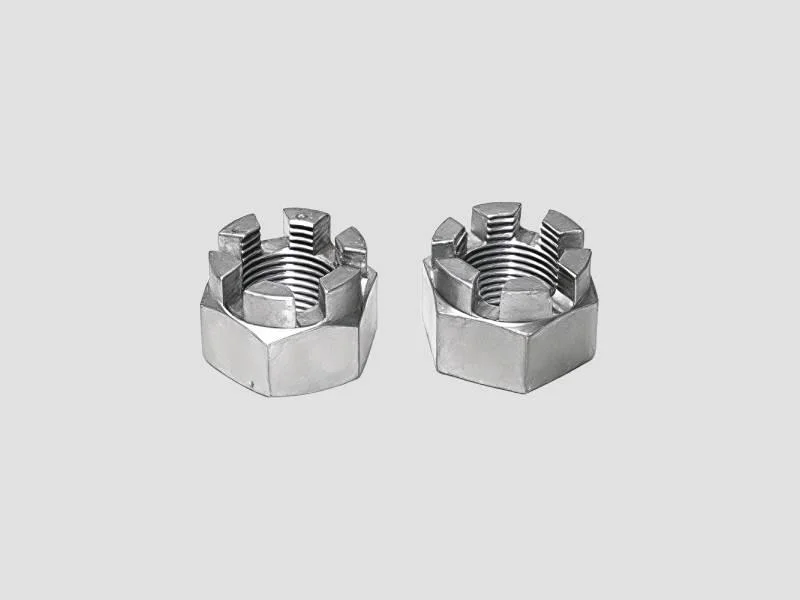
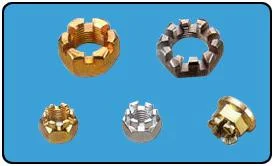
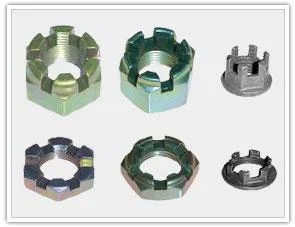
Castle nuts, also known as slotted nuts, are a specialized category of locking fasteners distinguished by their notched, castellated top. This design is not merely aesthetic; it se...
Castle nuts, also known as slotted nuts, are a specialized category of locking fasteners distinguished by their notched, castellated top. This design is not merely aesthetic; it serves the crucial function of enabling a positive mechanical lock. When aligned with a hole drilled through the mating bolt, a cotter pin or safety wire can be passed through, physically preventing the nut from rotating loose. This simple yet highly effective mechanism provides unparalleled security in environments plagued by vibration, shock, and dynamic stress. Manufactured from robust materials including carbon steel, stainless steel (grades 304 and 316), brass, and alloy steels like EN8, EN19, and ASTM A194 Grade 2H, they are built to last. Available in a comprehensive size range from M5 to M100, they offer tensile strengths from 400 to 1000 MPa and hardness up to 320 HV, ensuring they meet the demands of the most rigorous applications.

The reliability of castle nuts makes them the fastener of choice in industries where failure is not an option. In the automotive and heavy vehicle sector, they are fundamental for securing wheel hubs, steering linkages, and suspension pivot points. Aerospace and aviation rely on them for critical airframe and engine components, where every fastener's integrity is vital for safety. The railway industry uses them extensively in bogie assemblies and brake systems to withstand constant vibration. Heavy machinery, agricultural equipment, and construction vehicles employ castle nuts on drivelines and hydraulic cylinder mounts. Furthermore, their corrosion-resistant variants are essential in marine, offshore, and renewable energy infrastructure, securing everything from ship deck hardware to wind turbine structural bolts exposed to harsh elements.

For businesses, specifying castle nuts translates directly into enhanced operational safety, reduced maintenance costs, and improved equipment uptime. Their mechanical locking is fail-safe, does not degrade over time like chemical adhesives, and allows for easy disassembly and reassembly for inspection and servicing. This reusability and reliability prevent costly downtime caused by fastener failure and mitigate the risk of accidents. By choosing castle nuts manufactured to precise standards from quality materials, you invest in a component that ensures the long-term integrity and safety of your products and equipment, building trust with your end-users through demonstrable durability.

Key Features:
- Castellated (slotted) top design allows for secure locking with cotter pins or safety wire.
- Manufactured from high-grade materials including Carbon Steel, Stainless Steel (304/316), Brass, and Alloy Steels (EN8, EN19, ASTM A194 2H).
- Available in a wide metric size range from M5 to M100, accommodating diverse assembly requirements.
- Engineered for high tensile strength (400-1000 MPa) and hardness (80-320 HV) to withstand extreme loads.
- Provides a positive mechanical lock that is vibration-proof and resistant to shock and dynamic forces.

Benefits:
- Ensures maximum joint security and prevents loosening in high-vibration applications, enhancing safety.
- Offers a reusable locking solution that is easy to install, inspect, and disassemble for maintenance.
- Eliminates dependency on chemical threadlockers, providing a reliable mechanical alternative.
- Built from corrosion-resistant materials for long service life in demanding environments.
- Delivers proven reliability for critical assemblies, reducing maintenance costs and equipment downtime.
Specifications
| productDetailPage.specification.attribute | productDetailPage.specification.value |
|---|---|
| MaterialGrades AvailableSize RangeHeight RangeHardnessTensile Strength |
| Additional Information | |
|---|---|
| Country of Origin | India |
| Customisable | No |
Application
Castle nuts are engineered for assemblies where vibration loosening is a critical failure risk. Their unique castellated design allows a cotter pin or safety wire to be inserted through the slots and a drilled bolt shaft, creating a positive mechanical lock that prevents rotation and backing off, even under extreme dynamic loads and temperature fluctuations. This makes them indispensable for safety-critical connections.

These fasteners are specified across industries where joint integrity is non-negotiable. From the high-stress environment of a vehicle's axle to the demanding conditions of industrial machinery, castle nuts provide a reliable, reusable locking solution. They are preferred over chemical threadlockers in applications requiring frequent disassembly and inspection, offering a simple, visual verification of secure installation.
- Securing wheel bearings and kingpins on automotive and truck axles to prevent catastrophic wheel detachment.
- Fastening control linkages, landing gear components, and engine mounts in aerospace and aviation assemblies.
- Locking critical bolted joints on railway bogies, couplers, and track maintenance equipment.
- Assembling high-vibration components in agricultural tractors, combines, and construction excavators.
- Providing secure, corrosion-resistant fastening for marine hardware, offshore platform structures, and wind turbine tower flanges.
Trade Details
| Available Stock | In stock |
| Sample Availability | No |
Payment Terms
| Payment Terms |
|
Company Profile

Chennai Enterprises, Tamil Nadu Tamil Nadu, India
Tamil Nadu, IndiaTools & Hardware•ManufacturerRetailer
Factory Details
Factory SizeBelow 1000 sqm
Castle Nuts Slotted Locking Fasteners Carbon Steel Stainless Steel Brass Alloy Steel
Castle Nuts (Slotted Nuts) are high-strength locking fasteners with notched ends for secure mechanical locking. Available in carbon steel, stainless steel, brass, and alloy steel grades like SS 304, SS 316, and ASTM A194 Grade 2H, they resist vibration in critical assemblies from M5 to M100 sizes.
Min. Order Quantity: 1
Shipping
Shipping fee and delivery date to be negotiated. Contact supplier now for more details.
Chennai Enterprises
 Tamil Nadu, India
Tamil Nadu, IndiaTools & HardwareManufacturer